Guides › Crossbow hunting with a disability
Crossbow Hunting With a Disability or Limited Strength: Cocking Aids, Rests and Permits
Disclosure: this guide contains Amazon affiliate links. As an Amazon Associate we earn from qualifying purchases, at no extra cost to you.
A crossbow is one of the best ways to keep hunting when drawing a bow isn't possible anymore - after a shoulder injury, with arthritis, from a wheelchair, or just with less strength than you used to have. The right setup handles most of the hard parts, starting with cocking; a crank cocking device or a shooting rest (both on Amazon) can make the difference.
Short answer: pick a crossbow you can cock with a crank, shoot it from a rest or mount so you never hold its weight, and make sure you can reach and work the safety and trigger. If you need special equipment or want to use a crossbow in a season where it's normally restricted, check your state wildlife agency - many offer disability permits, usually with a doctor's certification.
Cocking: the biggest hurdle
For most hunters with limited strength, cocking is the hard part, not shooting.
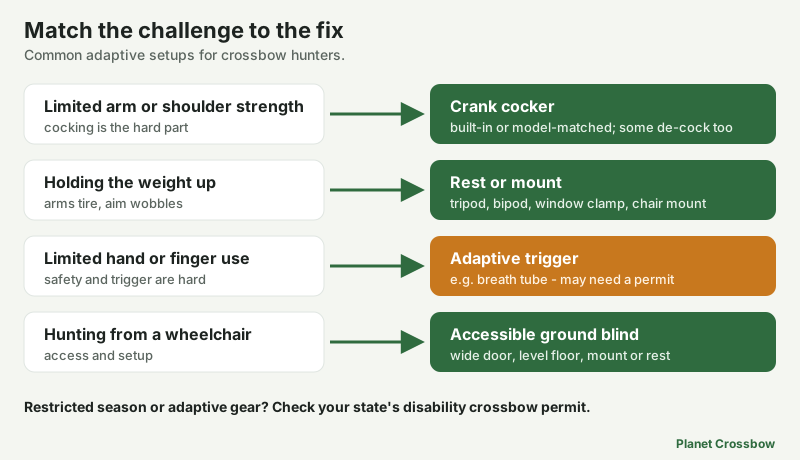
- Crank cocker. A crank lets almost anyone cock even a heavy crossbow slowly and evenly. Some crossbows have a built-in crank; add-on cranks must match your exact model.
- Built-in crank systems with de-cocking. Some designs also let you let the string down with the crank, so you don't have to shoot to unload (only if your manual says your model supports it).
- A rope cocker halves the effort but still needs two arms and some back strength.
- Get help safely. If someone else cocks it for you, have them do it right before you settle in, and follow your maker's limits on how long it can stay cocked (see how long a crossbow can stay cocked).
Holding the weight: rests and mounts
You shouldn't have to hold a crossbow up at all. Options include:
- shooting sticks, a bipod or a tripod rest;
- a rest that clamps to a blind window frame or a chair;
- wheelchair-mounted gun and crossbow mounts made for adaptive hunting - some even aim with a joystick.
A lighter, more compact crossbow helps too (see fitting a crossbow to a smaller shooter).
Trigger and safety
If hand or finger use is limited, there are adaptive triggers - from simple trigger extensions to breath-tube (sip-and-puff) releases. Some of these are only legal with a special permit. In New York, for example, the DEC's Modified Crossbow Permit allows a crossbow fitted with a breath-tube release for hunters with a permanent physical disability verified by a doctor.
Disability crossbow permits
Crossbow rules vary a lot by state. Where crossbows are restricted during archery season, many states offer a permit for hunters with a disability. Typical patterns we found on agency sites:
- A doctor certifies the disability on the agency's form.
- The permit covers specific seasons or equipment - for example a crossbow in archery season, or a modified crossbow.
- Some are permanent-disability only; others cover temporary conditions too.
Examples: New York's Modified Crossbow Permit, Michigan's bow permits for hunters with disabilities, Kentucky's hunting method exemptions (signed by a physician), and Florida's accommodations for hunters with disabilities. Details change, so read your own state's page before you apply - our sources section links these and a directory of every state agency.
Getting to your spot
- Ground blinds with wide doors and level floors work well from a wheelchair - and the crossbow's lack of draw movement is a big advantage in a blind (see crossbow blind setup).
- Accessible hunting areas: many state agencies list wheelchair-accessible blinds or hunts.
- Adaptive hunting groups such as programs run by the National Wild Turkey Federation share equipment ideas and host accessible hunts.
A checklist before you buy
- Is a crossbow legal for your hunt - and if not, do you qualify for a permit?
- Can you cock it safely with a crank or with reliable help?
- Can you shoot it entirely from a rest or mount?
- Can you reach the safety and trigger - or do you need an adaptive trigger (and a permit for it)?
- Can you get it into your blind or spot comfortably?
Frequently asked questions
Can I use a crossbow during archery season if I have a disability?
In many states, yes - either because crossbows are already allowed, or through a disability crossbow permit, usually with a doctor's certification. Check your state wildlife agency's current rules.
What is the easiest crossbow to cock?
One with a crank, especially a built-in crank system. A crank lets almost anyone cock slowly and evenly. Make sure any add-on crank fits your exact model.
Can someone else cock my crossbow for me?
Yes, and many hunters do. Have it cocked right before you settle in, keep it pointed safely, and follow your manufacturer's limit for how long it can stay cocked.
Is a breath-tube or sip-and-puff crossbow trigger legal?
Sometimes only with a permit. New York, for example, allows a breath-tube crossbow under its Modified Crossbow Permit for hunters with a permanent physical disability. Check your state.
Sources and further reading
- New York DEC: Modified Crossbow Permit - breath-tube crossbow, physician-verified permanent disability
- Michigan DNR: bow permits for hunters with disabilities - crossbow or modified bow permits
- Kentucky Department of Fish & Wildlife: hunting method exemptions - physician-signed exemption form
- Florida FWC: accommodations for hunters with disabilities - disability crossbow permit
- List of U.S. state fish and wildlife agencies - find your own state's rules
- National Wild Turkey Federation: adaptive equipment for wheelchair hunters - adaptive gear and accessible hunts
- American Hunter: shoulder issues? Crossbows keep you in the game - cocking aids
How this guide was written: Based on state wildlife agency permit pages (for example New York DEC), adaptive-hunting resources such as the National Wild Turkey Federation, and manufacturer safety guidance. Permit rules differ by state and change - always check your own agency.